
 Leo
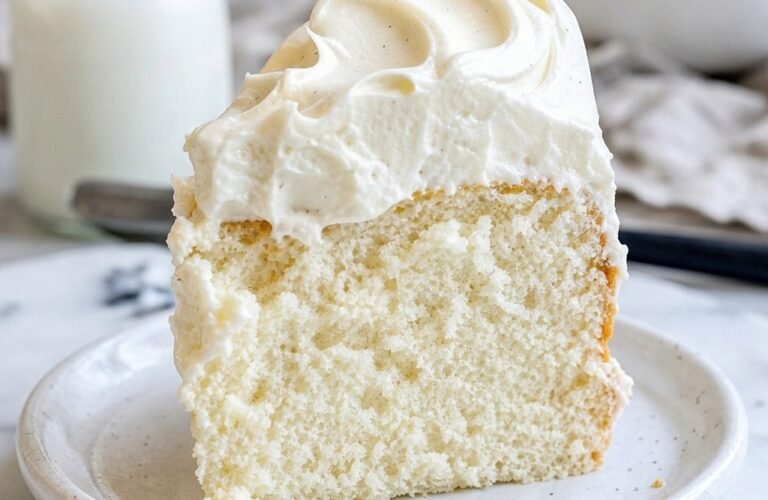
Light Greek Yogurt Vanilla Cake is the ultimate structural reset when you are completely sick of heavy, oil-logged desserts. Standard vanilla cakes rely on massive amounts of vegetable oil or butter to stay soft, which usually results in a dense crumb that feels greasy on the tongue. By tearing out half the butter and replacing it with thick, full-fat Greek yogurt, you achieve two things simultaneously: the acid in the yogurt forcefully tenderizes the gluten to create an incredibly light, fluffy texture, and the dairy fat locks in moisture so the cake never dries out.
I built this recipe for the days when you need a simple, reliable base that actually tastes like a high-end bakery. If you just finished building the heavy, fruit-dense Hawaiian Carrot Pineapple Cake or babysitting the massive spice load of my Moist Greek Yogurt Pumpkin Bars, you need a vanilla cake that essentially mixes itself. If you want something that takes even less time and requires zero oven space, pivot immediately to my Cute candy sushi | How to make candy sushi easy. But if you have an hour and want a towering, fluffy, white vanilla crumb, preheat your oven and grab your whisk.
🍰 Bake Time · Vanilla Cake · 10 Massive Slices
Prep time: 15 min · Bake time: 35 min · Calories: 320 kcal
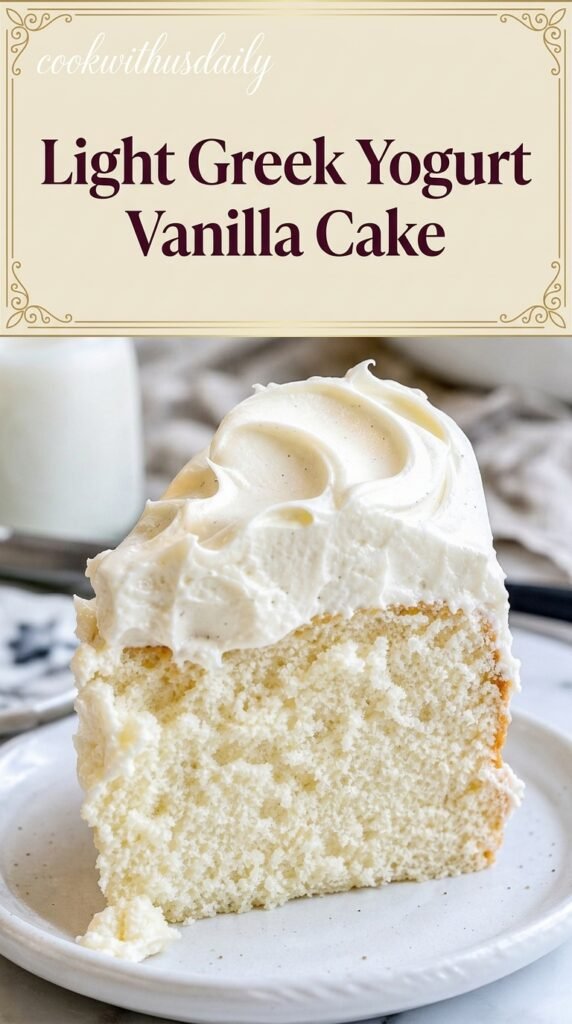
The Nutrition Breakdown
We are using Greek yogurt to replace the heavy oil, which drops the fat content significantly, but this is still a cake covered in butter-based frosting. Here is the estimated breakdown per thick slice (including the frosting):
- Calories: 320
- Protein: 6g
- Carbohydrates: 45g
- Dietary Fiber: 1g
- Total Sugars: 30g
- Fat: 14g
- Saturated Fat: 8g
- Sodium: 210mg
Do not attempt to make this a “diet” cake by buying 0% fat-free Greek yogurt. Fat-free yogurt is mostly water. If you dump water into a delicate vanilla cake batter, the steam will boil the flour in the oven, leaving you with a rubbery, dense, unchewable tire. You must buy the whole-milk (full-fat) Greek yogurt to protect the crumb.
The “Vanilla Overload” Mandate
This is the single most critical rule of baking a plain vanilla cake.
When you bake a chocolate cake or a spiced pumpkin cake, the heavy flavors hide the taste of the flour. In a pure white vanilla cake, there is absolutely nothing for the flour to hide behind. If you only use one measly teaspoon of cheap, artificial vanilla extract, your baked cake will taste exactly like raw flour and egg yolks. It will taste like a pancake.
You must aggressively overload the vanilla. You are putting a full tablespoon (three teaspoons) of high-quality, pure vanilla extract directly into the batter. This aggressive dose of vanilla chemically binds to the fat in the Greek yogurt, carrying that floral, sweet, authentic bakery flavor into every single bite of the cake.
The Ingredient Lineup

The Fluffy Cake Batter:
- 2 cups all-purpose flour
- 1 1/2 teaspoons baking powder
- 1/2 teaspoon baking soda
- 1/2 teaspoon fine sea salt
- 1 1/4 cups granulated white sugar
- 1/2 cup (1 stick) unsalted butter, completely softened to room temperature
- 3 large eggs, room temperature
- 1 cup full-fat plain Greek yogurt, room temperature
- 1 tablespoon pure vanilla extract
The Bakery Vanilla Frosting:
- 1/2 cup (1 stick) unsalted butter, aggressively softened
- 2 cups powdered sugar, sifted
- 1/4 cup full-fat plain Greek yogurt
- 1 teaspoon pure vanilla extract
- A tiny pinch of salt
The Room Temperature Warning: Every single dairy ingredient in this list (butter, eggs, yogurt) must be at room temperature before you start. If you dump freezing cold Greek yogurt into creamed butter, the butter will instantly seize into a million tiny, hard, yellow lumps. Your batter will be broken, and your cake will bake up flat and greasy. Leave the ingredients on the counter for two hours.
Beat, Fold, Bake, Swoop
1. Prep the pan and dry ingredients.
Preheat your oven to 350°F (175°C). Aggressively grease a single 9-inch round cake pan (make sure it is deep, at least 2 inches high) and line the bottom with a circle of parchment paper.
In a medium glass bowl, fiercely whisk the flour, baking powder, baking soda, and salt. Set aside.
2. Cream the fat.
In your stand mixer or a massive glass bowl, beat the softened butter and the white sugar on high speed for exactly 3 minutes. It should turn pale white and look like fluffy clouds. Drop the room-temperature eggs in one at a time, mixing just until the yellow yolk disappears.
3. The Yogurt Emulsion.

Turn the mixer to low. Dump the room-temperature Greek yogurt and the massive tablespoon of vanilla extract directly into the fluffy butter mixture. Beat it for 30 seconds until it is completely smooth and glossy.
4. The Gentle Fold.
Dump the dry flour mixture into the wet yogurt bowl. Switch from the electric mixer to a heavy rubber spatula. Gently fold the batter exactly ten times. Stop folding the exact second the last white streak of flour disappears. The batter will be incredibly thick and fluffy. If you overmix this, the gluten will develop, and your cake will be tough.
5. The Bake.

Scrape the thick, heavy batter directly into your prepared 9-inch pan. Because the batter is so thick, you must use your spatula to aggressively push it perfectly flat and all the way to the edges.
Bake at 350°F (175°C) for 35 to 40 minutes. A toothpick inserted into the dead center must come out completely clean. Pull the pan out and let the cake sit for 10 minutes before flipping it out onto a wire rack. It must be completely cold before you frost it.
6. The Frosting.
While the cake cools, beat the softened butter for the frosting on high speed for 2 minutes. Turn the mixer to low, and add the sifted powdered sugar. Once combined, add the Greek yogurt, vanilla, and salt. Blast it on high speed for 60 seconds until it looks like a thick, white, fluffy cloud.
7. The Swoop.

Dump the massive pile of white frosting directly into the center of the cold vanilla cake. Use a silver offset spatula to forcefully swoop and spread the frosting to the edges, creating huge, rustic, bakery-style waves. Slice into massive wedges.
My Ultimate Cake Disasters
The first time I attempted this, I thought I could cut corners by using cold ingredients. I pulled a cup of Greek yogurt directly out of the fridge and dumped it into my perfectly creamed butter and sugar. The cold shock instantly solidified the butter. The batter broke into a terrifying, separated, greasy sludge that looked like scrambled eggs. I baked it anyway. It came out of the oven looking like a dense, flat, oily pancake. You must use room-temperature dairy.
My second massive mistake was forgetting to sift the powdered sugar for the frosting. I just dumped two cups of sugar straight from the bag into the butter. The hard clumps of sugar became permanently encased in the butter fat. When I frosted the cake and took a bite, it felt like I was violently chewing on white sand. You have to push the powdered sugar through a fine mesh strainer first.
Frequently Asked Questions (FAQ)
Can I bake this as a layered cake instead of a single 9-inch round?
Yes. You can divide this exact batter evenly between two 8-inch round cake pans to make a stacked, two-layer cake. Because the 8-inch pans hold less batter, they will bake significantly faster. Check them at the 22-minute mark with a toothpick. You will likely need to double the frosting recipe to have enough to fill the center and coat the outside of two layers.
Why did my cake sink in the middle after I pulled it out of the oven?
You underbaked it, or you opened the oven door too early. If you open the oven door at the 15-minute mark to peek at the cake, the blast of cold air stops the baking powder from lifting the heavy batter. The center collapses into a raw crater. Do not open the door until the 30-minute mark, and do not pull it out until the toothpick is completely dry.
How do I store the cake so it doesn’t dry out?
Because this cake uses Greek yogurt instead of heavy oil, it is incredibly sensitive to the refrigerator. The cold air will aggressively stale the crumb and make the cake taste dry and hard. Store the frosted cake under a glass dome or wrapped in plastic wrap directly on the kitchen counter at room temperature. It will stay soft for 3 days.
Flavor Variations and Upgrades
The Berry Swirl: Right before you pour the batter into the pan, drop 1/2 cup of high-quality raspberry or strawberry jam directly into the bowl. Take a butter knife and drag it violently through the batter three times in a figure-eight pattern. Do not mix it! The cake will bake with massive, sticky pockets of bright red fruit running through the vanilla crumb.
The Lemon Olive Oil Twist: To make the cake taste incredibly sophisticated, swap the 1/2 cup of butter in the batter for 1/2 cup of high-quality extra virgin olive oil. Before mixing, forcefully zest two entire fresh lemons directly into the granulated sugar and rub it with your fingers. The bright citrus and peppery olive oil completely transform the vanilla profile.
The Confetti Birthday Cake: If you are making this for a celebration, gently fold exactly 1/2 cup of bright rainbow “jimmies” (the long, cylindrical sprinkles, not the hard round balls) directly into the batter at the very last second. The jimmies will melt into the crumb, turning the sophisticated vanilla base into a nostalgic Funfetti cake.
Cook With Us Daily · Light Greek Yogurt Vanilla Cake — 10 slices · 320 kcal each
🍰 Cook With Us Daily · Vanilla Cake
Light Greek Yogurt Vanilla Cake
Ingredients
01The Fluffy Cake Batter
The Bakery Vanilla Frosting
Kitchen Tools
02Directions
03Prep the Pan and Dry Ingredients
Preheat the oven to 350°F (175°C). Aggressively grease a single 9-inch round cake pan — deep, at least 2 inches high — and line the bottom with a circle of parchment paper. In a medium bowl, fiercely whisk the flour, baking powder, baking soda, and salt; set aside.
Cream the Fat
Beat the softened butter and white sugar on high speed for exactly 3 minutes, until pale white and fluffy as clouds. Drop the room-temperature eggs in one at a time, mixing just until the yellow yolk disappears. Every dairy ingredient must be room temperature — leave the butter, eggs, and yogurt on the counter for 2 hours first. Cold yogurt dumped into creamed butter seizes it into a million hard yellow lumps, and the broken batter bakes flat and greasy.
The Yogurt Emulsion
Turn the mixer to low. Add the room-temperature Greek yogurt and the full 1 tablespoon of pure vanilla extract — this aggressive vanilla dose binds to the yogurt fat and carries real bakery flavor into every bite, where a single cheap teaspoon would bake a cake that tastes like raw flour and eggs. Beat for 30 seconds until completely smooth and glossy.
The Gentle Fold
Dump the dry flour mixture into the wet yogurt bowl and switch from the electric mixer to a heavy rubber spatula. Gently fold the thick, fluffy batter exactly ten times, stopping the exact second the last white streak of flour disappears. Leave it slightly lumpy — overmixing develops gluten and the cake bakes tough.
The Bake
Scrape the thick, heavy batter into the prepared pan and aggressively push it perfectly flat and all the way to the edges. Bake at 350°F (175°C) for 35 to 40 minutes — a toothpick in the dead center must come out completely clean. Do not open the oven door before the 30-minute mark: the blast of cold air stops the baking powder mid-lift and the center collapses into a raw crater. Let the cake sit in the pan 10 minutes before flipping it onto a wire rack. It must be completely cold before frosting.
The Frosting
While the cake cools, beat the aggressively softened frosting butter on high speed for 2 minutes. Turn the mixer to low and add the sifted powdered sugar; once combined, add the Greek yogurt, vanilla, and salt. Blast it on high speed for 60 seconds until it looks like a thick, white, fluffy cloud.
The Swoop
Dump the massive pile of white frosting directly into the center of the cold vanilla cake. Use an offset spatula to forcefully swoop and spread it to the edges, creating huge, rustic, bakery-style waves. Slice into 10 massive wedges.
Nutrition
04| Nutrient | Per slice (1 of 10) |
|---|---|
| Calories | 320 |
| Protein | 6 g |
| Carbohydrates | 45 g |
| Dietary Fiber | 1 g |
| Total Sugars | 30 g |
| Fat | 14 g |
| Saturated Fat | 8 g |
| Sodium | 210 mg |