 Leo
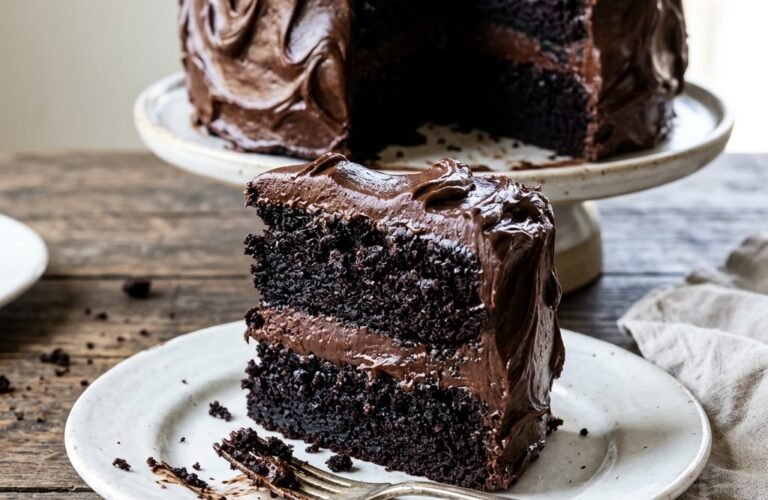
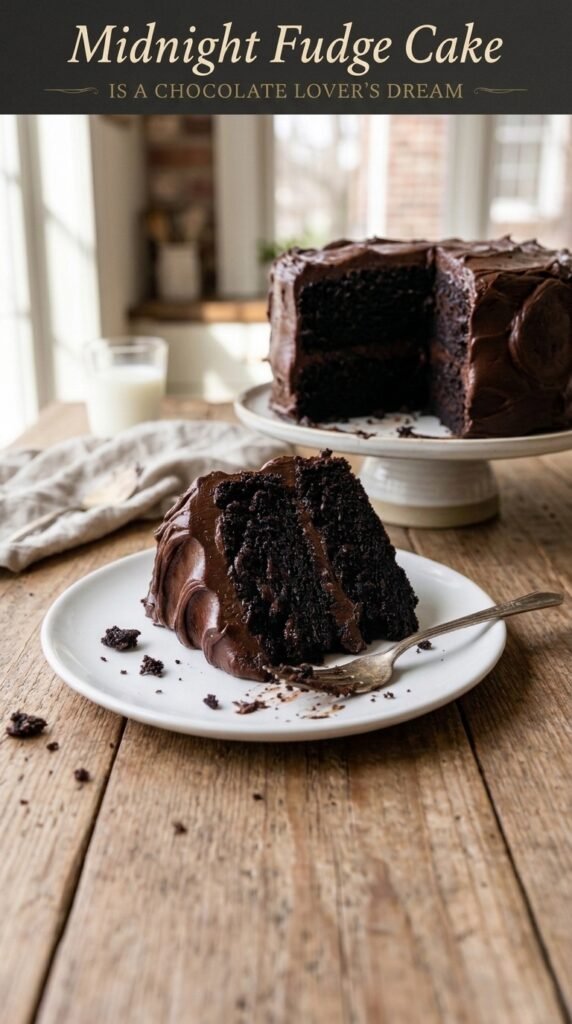
midnight fudge cake is a chocolate lover’s dream because it completely abandons the polite, dry, airy texture of standard birthday cakes and commits entirely to absolute, pitch-black decadence. Most homemade chocolate cakes suffer from the same fatal flaw: they bake up light brown, tasting more like cocoa-scented flour than actual fudge. If you want a cake so dark it practically absorbs light, with a crumb so intensely moist it borders on being a brownie, you have to fundamentally change your ingredients and your mixing method.
I pull this recipe out when I need to permanently silence anyone who claims boxed cake mix is superior. If you have been satisfying your cocoa cravings with bite-sized treats like the Hot Chocolate Cookies with Melted Marshmallow Centers or the healthy Little Chocolate Chickpea Truffles, it is time to upgrade to a massive, structural masterpiece. If you just finished building my Chocolate Peanut Butter Valentine’s Heart or carefully managing the water bath for an Easy Eggnog Cheesecake, this cake is actually a mental break—the batter mixes together in one bowl. Grab your darkest cocoa powder and preheat your oven.
🍫 Bake Time · Layer Cake · 12 Massive Slices
Prep time: 20 min · Bake time: 35 min · Calories: 610 kcal
The Nutrition Breakdown
We are building a towering, two-layer cake that relies entirely on liquid oil for moisture and is smothered in a butter-and-sugar fudge frosting. Do not look for dietary redemption here. Here is the estimated breakdown per thick slice:
- Calories: 610
- Protein: 7g
- Carbohydrates: 82g
- Dietary Fiber: 5g
- Total Sugars: 64g
- Fat: 32g
- Saturated Fat: 14g
- Sodium: 420mg
Do not attempt to make this “healthy” by drastically cutting the sugar or swapping the vegetable oil for applesauce. In a cake this aggressively dark and bitter, the sugar acts as the sole balancing agent and locks in the moisture. Applesauce will cause the heavy cocoa powder to seize, resulting in a rubbery, tough, dry disk of bread.
The “Dutch-Process Only” Mandate
This is the absolute most critical rule of baking a midnight-black cake. If you ignore this, your cake will be pale brown and taste like dusty chalk.
Standard grocery store cocoa powder (like regular Hershey’s) is natural cocoa. It is highly acidic, very light in color, and has a sharp, slightly fruity flavor. If you use it here, you are making a standard, boring chocolate cake.
You absolutely must buy Dutch-Process Cocoa Powder. Dutch-process cocoa has been chemically washed in an alkaline solution. This violently neutralizes the acid, deepens the flavor into a smooth, rich fudge profile, and turns the powder incredibly dark—almost black. This is the only way to achieve that signature “midnight” color and intense bakery-level flavor without adding artificial black food dye.
The Ingredient Lineup
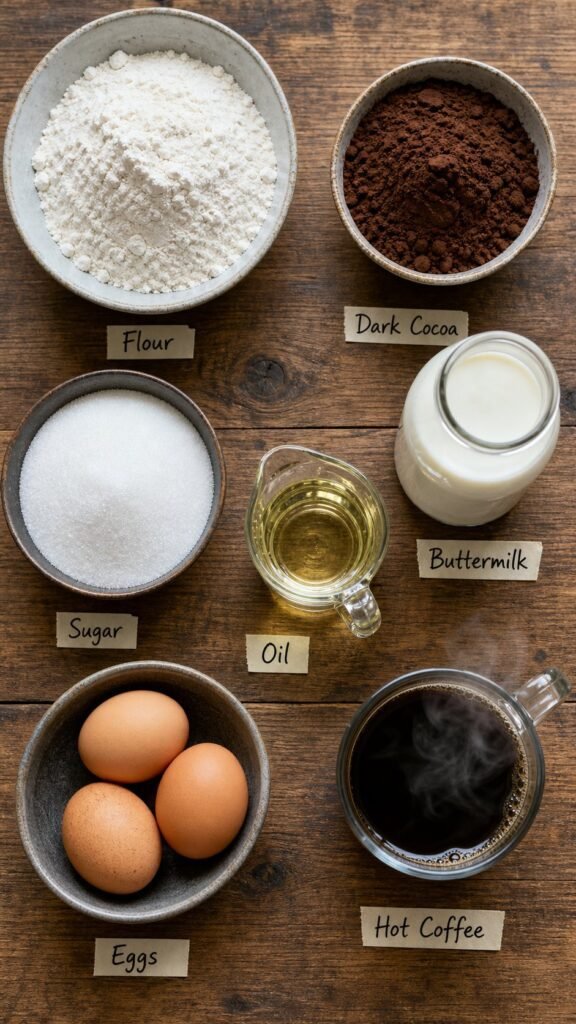
The Pitch-Black Batter:
- 2 cups all-purpose flour
- 2 cups granulated white sugar
- 3/4 cup premium Dutch-process cocoa powder
- 2 teaspoons baking powder
- 1 1/2 teaspoons baking soda
- 1 teaspoon fine sea salt
- 1 cup full-fat buttermilk, room temperature
- 1/2 cup neutral vegetable oil (or canola oil)
- 2 large eggs, room temperature
- 2 teaspoons pure vanilla extract
- 1 cup screaming hot, boiling black coffee (or boiling water)
The Midnight Fudge Frosting:
- 1 cup (2 sticks) unsalted butter, aggressively softened
- 1/2 cup Dutch-process cocoa powder, sifted
- 4 cups powdered sugar, sifted
- 1/4 cup heavy whipping cream
- 1 teaspoon vanilla extract
- A heavy pinch of sea salt
The Boiling Coffee Warning: The batter will look incredibly thick until the absolute final step, where you must dump 1 cup of boiling black coffee directly into the bowl. The intense heat violently “blooms” the cocoa powder, releasing the rich oils and turning the batter into a thin, watery soup. Do not panic. This thin liquid is the exact secret to the fudgy crumb.
Whisk, Pour, Bake, Swoop
1. Prep the armor.
Preheat your oven to 350°F (175°C). You need two 8-inch round metal cake pans with high walls (at least 2 inches deep). Aggressively grease them with butter and line the absolute bottoms with a perfect circle of parchment paper. If you skip the parchment, the massive amount of sugar in this wet batter will permanently glue the cake to the metal.
2. Whisk the dry.
In a massive glass mixing bowl, fiercely whisk the flour, white sugar, Dutch-process cocoa powder, baking powder, baking soda, and salt. You must whisk this for a full minute to ensure the leavening agents are distributed perfectly, or your cake will rise lopsided.
3. The Wet Emulsion.
In a separate medium bowl, whisk the room-temperature buttermilk, vegetable oil, eggs, and vanilla extract until completely smooth. Dump this wet mixture directly into the dry chocolate flour. Use a heavy wooden spoon to stir it just until it forms a thick, heavy, dark paste.
4. The Boiling Shock.
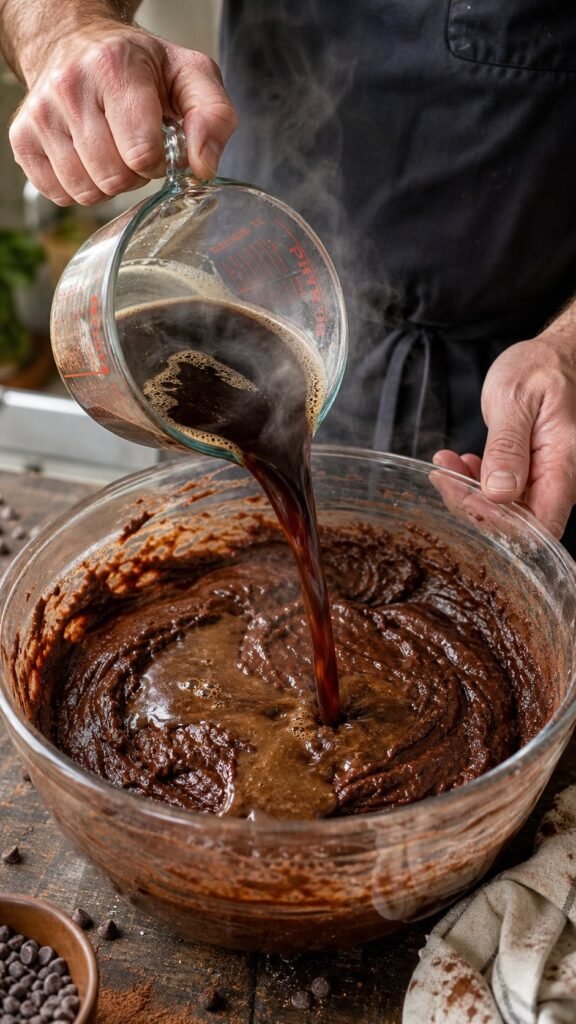
Microwave a cup of strong black coffee until it is violently boiling. Slowly and carefully, pour the screaming hot coffee directly into the thick chocolate paste while whisking constantly.
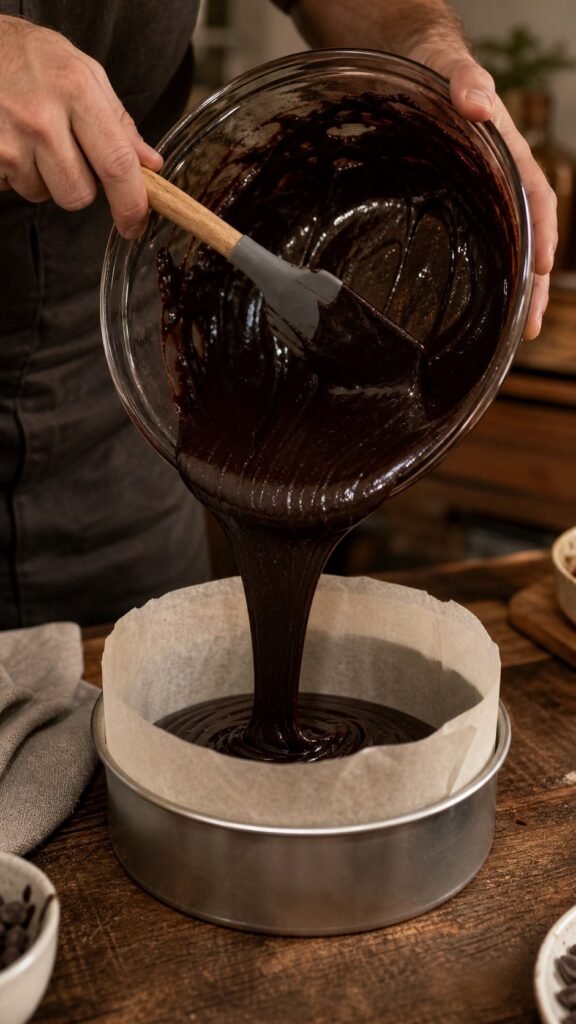
The batter will instantly transition from a heavy paste into a very thin, watery, pitch-black liquid. Divide this watery batter evenly between the two prepared 8-inch pans.
5. The Bake.
Carefully transfer the sloshing pans to the 350°F oven. Bake for exactly 30 to 35 minutes. A toothpick inserted into the dead center must come out clean. Pull the pans out. Do not touch the cakes for exactly 15 minutes; they are structurally fragile when hot. After 15 minutes, flip them out onto a wire rack. They must be freezing cold before you frost them.
6. The Fudge Frosting.
While the cake cools, beat the softened butter on high speed in your stand mixer for 2 minutes. Turn the mixer to low. Slowly add the sifted powdered sugar and the sifted Dutch-process cocoa powder. Once combined, pour in the heavy cream, vanilla, and salt. Blast it on high speed for 2 full minutes until it transforms into a thick, glossy, fluffy fudge.
7. Stack and Swoop.
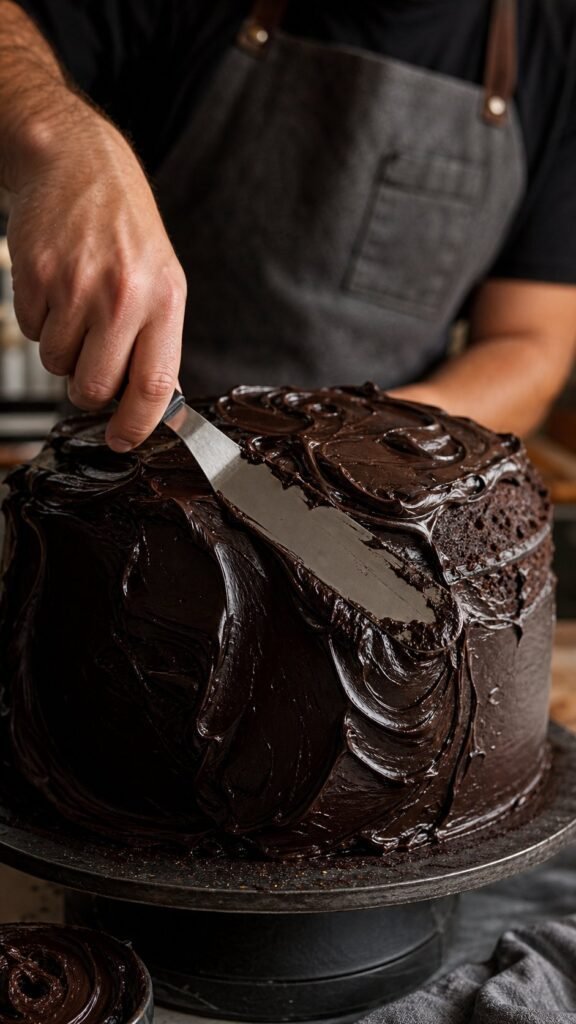
If your cakes domed in the oven, take a serrated bread knife and saw the rounded tops off so the layers stack completely flat. Place the first layer on a cake stand. Drop a massive, half-inch thick layer of the dark frosting over it. Stack the second cake layer directly on top.
Use a silver offset spatula to forcefully swoop and spread the remaining frosting all over the top and sides of the cake. Leave deep, aggressive ridges and swirls to give it that rustic, high-end bakery aesthetic.
My Ultimate Cake Disasters
The first time I attempted this recipe, I ignored the room-temperature buttermilk rule. I poured freezing cold milk directly into the batter. The cold milk drastically dropped the overall temperature of the batter, meaning when the cake went into the oven, it took an extra 20 minutes to bake. The resulting crumb was incredibly dense, rubbery, and heavy, rather than light and fudgy. You must leave the dairy on the counter for two hours before mixing.
My second massive failure was being too impatient during the cooling process. I tried to frost the cake layers while they were still slightly warm to the touch. The residual heat from the dark chocolate sponge instantly melted the butter in my thick fudge frosting. The frosting turned into a slick, wet glaze, and the top cake layer literally hydroplaned off the bottom layer and crashed onto my kitchen counter. You must wait until the cake is 100% cold.
Frequently Asked Questions (FAQ)
Why did my cake sink entirely in the middle when I pulled it out?
You opened the oven door too early. This cake batter is highly liquid, which means it relies heavily on steam and the chemical reaction of the baking powder to physically lift the crumb. If you open the oven door at the 15-minute mark to peek, the blast of cold air immediately kills the rise. The structure collapses, leaving you with a raw, sunken crater. Keep the door shut for at least 30 minutes.
What if I hate the taste of coffee?
You will not taste the coffee. The coffee simply enhances the bitter notes of the cocoa powder, acting as a flavor amplifier, much like vanilla extract. However, if you are strictly opposed to it, you can effortlessly swap the 1 cup of boiling coffee for 1 cup of screaming hot, boiling water. The texture will be exactly the same, but the chocolate flavor will be slightly less intense.
How do I store this massive cake without it drying out?
Because this cake uses oil instead of butter in the batter, it stays incredibly moist for days. Do not put it in the refrigerator! The cold air in the fridge will actively pull moisture out of the crumb, making it taste dry and stale. Keep the entire cake on your kitchen counter under a glass cake dome, or press plastic wrap directly against the cut edges. It will stay soft for up to 4 days.
Flavor Variations and Upgrades
The Salted Caramel Core: If you want a massive flavor contrast, do not put chocolate frosting between the two cake layers. Instead, spread a thick, heavy layer of high-quality salted caramel sauce and a handful of toasted pecans between the layers. Frost the outside of the cake with the dark chocolate fudge. When you slice it, the caramel violently oozes out.
The Raspberry Dark Chocolate: Cherry and raspberry pair perfectly with midnight chocolate. Buy a jar of premium, tart raspberry preserves. Spread a 1/4-inch thick layer of the preserves directly over the bottom cake layer before you stack the top layer. The sharp, acidic bite of the bright red fruit perfectly cuts through the massive sugar load of the double chocolate.
The Espresso Crunch: If you want to lean heavily into a mocha profile, add 1 tablespoon of instant espresso powder directly into the chocolate fudge frosting. Right after you frost the outside of the cake, forcefully press 1/2 cup of crushed, chocolate-covered espresso beans into the sides of the wet frosting to create an aggressive, bitter crunch.
Cook With Us Daily · Midnight Fudge Cake — 12 slices · 610 kcal each
🍫 Cook With Us Daily · Layer Cake
Midnight Fudge Cake
Ingredients
01The Pitch-Black Batter
The Midnight Fudge Frosting
Kitchen Tools
02Directions
03Prep the Armor
Preheat the oven to 350°F (175°C). Grease two 8-inch round metal cake pans with high walls (at least 2 inches deep) with butter and line the bottoms with a perfect circle of parchment paper. If you skip the parchment, the massive amount of sugar in this wet batter permanently glues the cake to the metal.
Whisk the Dry
In a massive glass mixing bowl, fiercely whisk the flour, white sugar, cocoa powder, baking powder, baking soda, and salt for a full minute so the leavening is distributed perfectly — otherwise the cake rises lopsided. The cocoa must be Dutch-process: natural grocery-store cocoa is highly acidic and pale and bakes a standard, boring light-brown cake. Only alkaline-washed Dutch-process neutralizes the acid, deepens the flavor into smooth fudge, and turns the powder almost black — the only way to get the midnight color with no artificial dye. And do not cut the sugar: in a batter this dark and bitter it is the sole balancing agent and the moisture lock.
The Wet Emulsion
In a separate medium bowl, whisk the room-temperature buttermilk, vegetable oil, eggs, and vanilla until completely smooth. Poured in cold, the buttermilk drops the batter temperature and bakes a dense, rubbery, heavy crumb after an extra 20 minutes in the oven — leave the dairy on the counter for 2 hours first. The oil is structural too: never swap it for applesauce — the heavy cocoa seizes and the cake bakes into a tough, dry, rubbery disk. Dump the wet mixture into the dry chocolate flour and stir with a heavy wooden spoon just until it forms a thick, heavy, dark paste.
The Boiling Shock
Microwave a cup of strong black coffee until it is violently boiling. Slowly and carefully pour the screaming hot coffee into the thick chocolate paste while whisking constantly — this is the absolute final step, and the intense heat violently “blooms” the cocoa, releasing the rich oils. The batter will instantly turn into a very thin, watery, pitch-black liquid. Do not panic — this thin liquid is the exact secret to the fudgy crumb. You will not taste the coffee; it is a pure flavor amplifier like vanilla. Strictly opposed to it? Boiling water works instead — same texture, slightly less intense chocolate. Divide the watery batter evenly between the two prepared pans.
The Bake
Carefully transfer the sloshing pans to the 350°F (175°C) oven and bake for exactly 30 to 35 minutes, until a toothpick in the dead center comes out clean. Keep the oven door shut for at least 30 minutes — a peek lets in cold air that kills the rise and leaves a raw, sunken crater. When the pans come out, do not touch the cakes for exactly 15 minutes — they are structurally fragile when hot. Then flip them out onto a wire rack. They must be freezing cold before you frost them — warm layers melt the fudge frosting into a slick glaze and the top layer hydroplanes off the bottom.
The Fudge Frosting
While the cake cools, beat the softened butter on high speed in your stand mixer for 2 minutes. Turn the mixer to low and slowly add the sifted powdered sugar and sifted Dutch-process cocoa. Once combined, pour in the heavy cream, vanilla, and salt. Blast it on high speed for 2 full minutes until it transforms into a thick, glossy, fluffy fudge.
Stack and Swoop
If the cakes domed, saw the rounded tops off with a serrated bread knife so the layers stack completely flat. Place the first layer on a cake stand, drop a massive half-inch-thick layer of the dark frosting over it, and stack the second layer directly on top. Use an offset spatula to forcefully swoop the remaining frosting all over the top and sides, leaving deep, aggressive ridges and swirls for that rustic, high-end bakery aesthetic.
Nutrition
04| Nutrient | Per slice (1 of 12) |
|---|---|
| Calories | 610 |
| Protein | 7 g |
| Carbohydrates | 82 g |
| Dietary Fiber | 5 g |
| Total Sugars | 64 g |
| Fat | 32 g |
| Saturated Fat | 14 g |
| Sodium | 420 mg |