 Leo
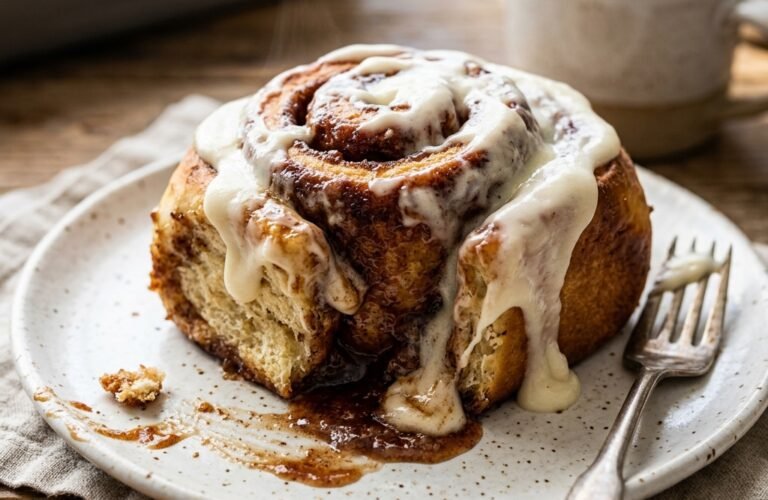
The Best Gluten-Free Cinnamon Rolls are an absolute miracle of modern baking chemistry. Let’s be honest: 90% of gluten-free baking is a depressing compromise. When you remove gluten from a yeasted dough, you are literally removing the structural glue that makes bread soft, stretchy, and chewy. Most gluten-free cinnamon rolls bake up like dry, dense hockey pucks that crumble into dust the second you try to unroll them. By aggressively altering the hydration levels and forcing a massive amount of dairy fat into a high-quality gluten-free flour blend, we can rebuild that missing elasticity.
I developed this recipe because I was completely exhausted by watching people with dietary restrictions eat sad, hard pastries at holiday brunches. If you have already mastered the inherently gluten-free Christmas Meringue Kisses and survived the fat-free constraints of the Delicious Low Calorie Dairy Free Birthday Cake, you are ready to tackle yeasted dough. If you don’t actually need to be gluten-free and just want the easiest shortcut imaginable, go crack open a can for my Pumpkin Pie Crescent Rolls with Cream Cheese Filling. But if you need a soft, gooey, yeast-risen cinnamon roll that will fool everyone at the table into thinking they are eating wheat, clear your counter.
🥐 Bake Time · Gluten-Free Pastry · 12 Rolls
Prep time: 30 min · Proof time: 90 min · Bake time: 25 min · Calories: 380 kcal
The Nutrition Breakdown
We are taking a heavy gluten-free starch blend and enriching it with eggs, whole milk, and butter, then burying it in cream cheese frosting. This is a massive, heavy holiday pastry. Here is the estimated breakdown per large roll:
- Calories: 380
- Protein: 5g
- Carbohydrates: 56g
- Dietary Fiber: 2g
- Total Sugars: 32g
- Fat: 16g
- Saturated Fat: 9g
- Sodium: 210mg
Do not try to make this “healthier” by cutting the butter or the milk. Because gluten-free flour lacks natural elasticity, it desperately relies on heavy dairy fat to lubricate the starches and keep the final bread soft. If you replace the whole milk with water, your rolls will be as tough as shoe leather.
The “Xanthan Gum” Mandate
This is the single most critical rule of baking gluten-free yeast bread.
If you just swap regular flour for a cheap bag of gluten-free rice flour, your dough will never pull together. It will remain a wet, crumbly sand that literally cannot be rolled into a cylinder. Gluten acts like a microscopic net that traps the air bubbles created by the yeast. Without that net, the yeast gas escapes, and the bread bakes completely flat.
You absolutely must use a premium Gluten-Free 1-to-1 Baking Flour blend that explicitly states it contains Xanthan Gum on the ingredient label (like Bob’s Red Mill or King Arthur). Xanthan gum is the chemical replacement for gluten. It turns the crumbly rice flour into a sticky, cohesive, elastic dough that can trap yeast gas and survive being rolled up. If your flour blend does not have it, you must buy a separate bottle of xanthan gum and whisk exactly 1 teaspoon into the dry flour.
The Ingredient Lineup

The Enriched GF Dough:
- 3 1/2 cups Premium Gluten-Free 1-to-1 Baking Flour (MUST contain Xanthan Gum)
- 1 cup whole milk, warmed to exactly 110°F (43°C)
- 2 1/4 teaspoons active dry yeast (one standard packet)
- 1/3 cup granulated white sugar
- 1/2 cup (1 stick) unsalted butter, melted and cooled
- 2 large eggs, room temperature
- 1 teaspoon fine sea salt
The Dark Cinnamon Paste:
- 3/4 cup packed dark brown sugar
- 2 tablespoons ground cinnamon
- 1/4 cup (1/2 stick) unsalted butter, incredibly soft
The Cream Cheese Frosting:
- 4 oz full-fat cream cheese, heavily softened
- 3 tablespoons unsalted butter, softened
- 1 1/2 cups powdered sugar, sifted
- 1 teaspoon vanilla extract
- 1 tablespoon whole milk
The Milk Temperature Rule: Use a meat thermometer to check your milk before adding the yeast. If the milk is colder than 100°F, the yeast will stay asleep, and the GF dough will never rise. If the milk is hotter than 120°F, you will physically scald and kill the yeast, and your dough will be a dense brick.
Activate, Mix, Roll, Bake
1. Wake up the yeast.
Pour the warm 110°F whole milk into the bowl of your stand mixer. Whisk in 1 tablespoon of the granulated sugar and sprinkle the packet of yeast directly over the top. Let it sit completely untouched for 10 minutes. It must grow a thick, foamy raft on the surface. If it doesn’t foam, throw it away. Your yeast is dead.
2. Build the GF dough.
Once the yeast is foamy, dump in the melted butter, the room-temperature eggs, and the rest of the white sugar. Whisk aggressively until smooth.
Attach the dough hook to your mixer. Dump in the 3 1/2 cups of GF flour and the salt. Turn the mixer on medium and beat it for exactly 5 minutes.
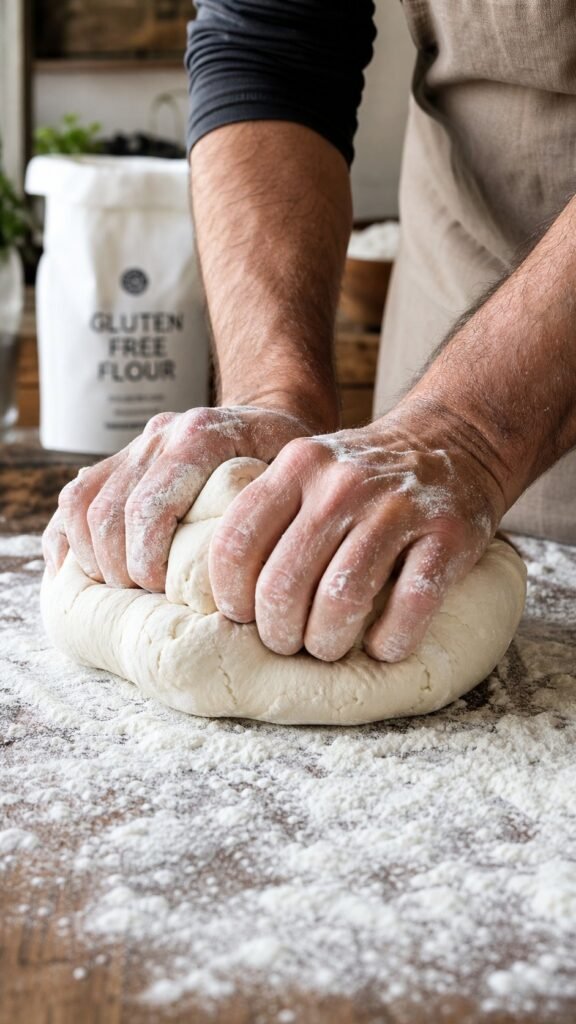
Warning: Gluten-free dough does not look like wheat dough! It will not form a perfectly clean, dry ball that clears the sides of the bowl. It will look like an incredibly thick, sticky, wet muffin batter. This is exactly what you want. Do not add more flour, or the rolls will be dry.
3. The First Proof.
Scrape the wet dough into a greased glass bowl. Cover tightly with plastic wrap. Let it sit in a warm corner of your kitchen for 1 hour until it noticeably puffs up. (GF dough doesn’t double in size quite as aggressively as wheat dough).
4. The Smear.
In a small bowl, use a fork to mash the dark brown sugar, cinnamon, and the 1/4 cup of incredibly soft butter together until it forms a thick, dark paste.
5. The Roll and Cut.
Place a massive sheet of parchment paper on your counter and heavily dust it with GF flour. Scrape the puffed dough onto the parchment. Heavily dust the top of the dough and your rolling pin. Roll the dough out into a 12×18-inch rectangle. It will be delicate, so don’t press too hard.
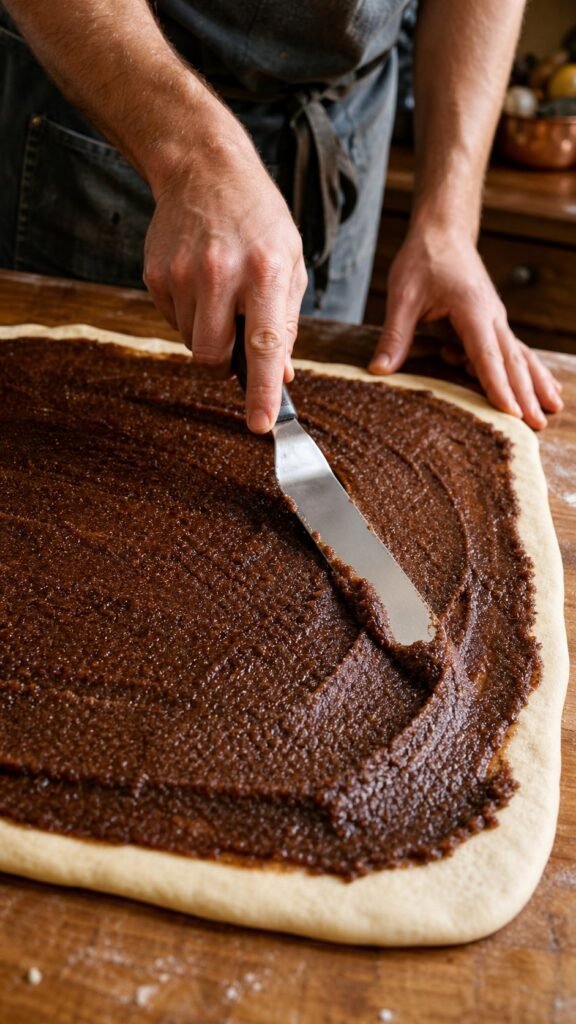
Use a silver offset spatula to aggressively spread the thick cinnamon paste completely across the dough, leaving a 1/2-inch bare border on the top edge.
Using the parchment paper to help lift the delicate dough, tightly roll the rectangle up into a long cylinder.
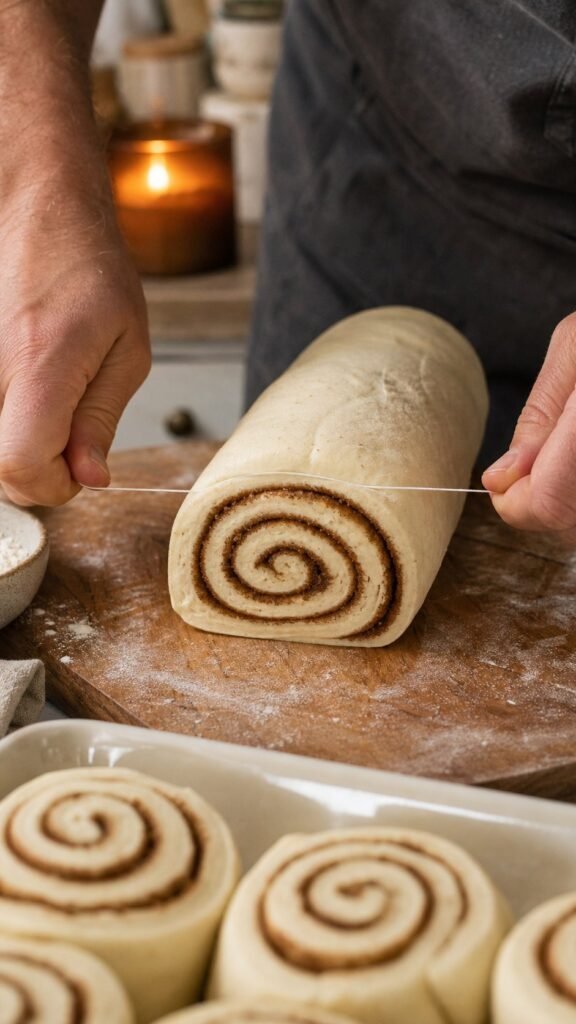
Do not use a knife to cut this! A knife will crush the fragile GF dough. Slide a 12-inch piece of unflavored dental floss completely under the dough log, cross the two ends over the top, and pull tightly in opposite directions to cleanly slice the log into 12 even rolls.
6. The Second Proof and Bake.
Place the rolls into a greased 9×13-inch glass baking dish. Cover with a towel and let them puff up for another 30 minutes.
Bake at 350°F (175°C) for 25 to 28 minutes until the tops are golden brown.
7. The Frosting.
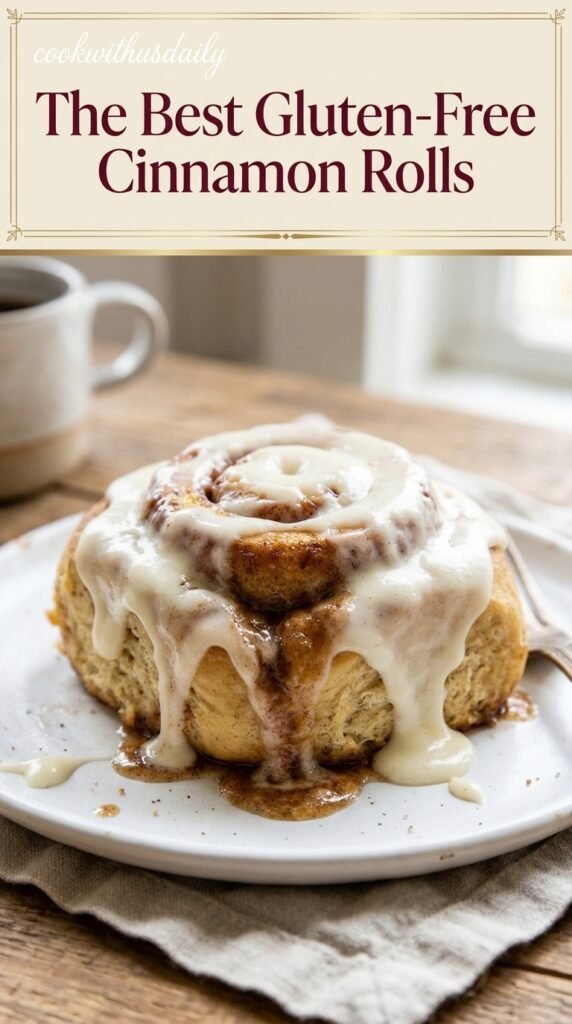
While they bake, beat the soft cream cheese and butter until smooth. Add the powdered sugar, vanilla, and milk. Beat on high until fluffy. Let the rolls cool for exactly 5 minutes before aggressively smothering them in the white frosting so it melts deep into the cinnamon spirals.
My Ultimate GF Disasters
My very first attempt at gluten-free cinnamon rolls was a textural nightmare because I tried to knead the dough like normal wheat bread. I kept adding extra GF flour to the bowl because the dough looked “too sticky and wet.” By the time I could physically touch the dough without it sticking to my hands, I had added an extra cup of flour. When they baked, they were literal choking hazards. They were so dense and dry that they crumbled into dust when I tried to cut them. You must accept that GF dough is supposed to feel wet and sticky.
My second mistake was using a dull chef’s knife to cut the raw log. Because GF dough lacks the elastic stretch of gluten, the heavy downward pressure of the knife completely crushed the cylinder flat. Instead of round spirals, I had squashed, ugly rectangles that leaked all the cinnamon butter onto the pan. You absolutely must use the dental floss trick.
Frequently Asked Questions (FAQ)
Why didn’t my rolls puff up and touch each other in the pan?
Gluten-free yeast dough does not have the massive, aggressive oven-spring that wheat dough has. It relies entirely on the yeast gas trapped by the xanthan gum. If your milk was too hot and killed the yeast, or if your kitchen was freezing cold during the proofing stages, the dough will just sit there like a brick. Make sure your yeast foams, and let the dough proof in a warm spot.
Can I prep these the night before?
Yes, but you have to alter the proofing schedule. After you cut the rolls and place them in the 9×13 pan, do not do the second 30-minute proof on the counter. Cover the pan tightly with plastic wrap and immediately put it in the refrigerator overnight. The cold forces the yeast into hibernation. The next morning, you must pull the pan out and let it sit on the counter for 1 hour to wake up and puff before putting it in the oven.
How do I store the leftovers so they don’t turn hard?
Gluten-free baked goods go stale aggressively fast. Within 12 hours of baking, they will start to firm up. You must keep them in an airtight Tupperware container at room temperature. Do not put them in the fridge. To restore the soft, gooey texture the next day, you absolutely must microwave the roll for exactly 15 seconds. The microwave re-steams the starches and makes it perfectly soft again.
Flavor Variations and Upgrades
The Maple Pecan Core: If you want a heavier, crunchier roll, aggressively fold 1/2 cup of finely chopped, toasted pecans directly into the cinnamon-butter paste before you spread it on the raw dough. When you make the frosting, swap the milk for 2 tablespoons of real, dark maple syrup.
The Apple Butter Swirl: Completely abandon the cinnamon butter paste. Instead, buy a jar of thick, high-quality, spiced apple butter. Use an offset spatula to spread a massive, 1/4-inch thick layer of the dark apple butter completely across the raw dough before rolling it up. It makes the rolls insanely moist and tastes exactly like a fall pie.
The Brown Butter Frosting: If standard cream cheese frosting is too sweet for you, brown the 3 tablespoons of butter first. Melt it in a skillet until it foams and smells intensely nutty, let it solidify back to room temperature, and then beat it with the cream cheese. The deep, caramelized flavor completely transforms the bakery profile.
Cook With Us Daily · The Best Gluten-Free Cinnamon Rolls — 12 rolls · 380 kcal each
🥐 Cook With Us Daily · Gluten-Free Pastry
The Best Gluten-Free Cinnamon Rolls
Ingredients
01The Enriched GF Dough
The Dark Cinnamon Paste
The Cream Cheese Frosting
Kitchen Tools
02Directions
03Wake Up the Yeast
Pour the warm 110°F (43°C) whole milk into the bowl of your stand mixer. Whisk in 1 tablespoon of the granulated sugar and sprinkle the packet of yeast directly over the top. Let it sit completely untouched for 10 minutes. It must grow a thick, foamy raft on the surface — if it doesn’t foam, throw it away, your yeast is dead.
Build the GF Dough
Once the yeast is foamy, add the melted butter, room-temperature eggs, and the rest of the sugar; whisk aggressively until smooth. Attach the dough hook, add the GF flour and salt, and beat on medium for exactly 5 minutes. Gluten-free dough does not look like wheat dough — it will be an incredibly thick, sticky, wet muffin batter, not a clean ball. This is exactly right. Do not add more flour, or the rolls bake dry and crumbly.
The First Proof
Scrape the wet dough into a greased glass bowl and cover tightly with plastic wrap. Let it sit in a warm corner for 1 hour until it noticeably puffs up — GF dough doesn’t double as aggressively as wheat dough.
The Smear
In a small bowl, use a fork to mash the dark brown sugar, cinnamon, and the ¼ cup of incredibly soft butter together until it forms a thick, dark paste.
The Roll and Cut
Lay a massive sheet of parchment on the counter and heavily dust it with GF flour. Scrape the puffed dough on top, dust the dough and rolling pin, and gently roll into a 12×18-inch rectangle — the dough is delicate, so don’t press hard. Spread the cinnamon paste completely across it with an offset spatula, leaving a ½-inch bare border on the top edge. Use the parchment to help lift and tightly roll the dough into a long cylinder. Do not cut with a knife — it crushes the fragile GF dough flat. Slide a 12-inch piece of unflavored dental floss under the log, cross the ends over the top, and pull tightly in opposite directions to slice 12 clean, even rolls.
The Second Proof and Bake
Place the rolls in a greased 9×13-inch glass baking dish, cover with a towel, and let them puff up another 30 minutes. Bake at 350°F (175°C) for 25 to 28 minutes, until the tops are golden brown.
The Frosting
While the rolls bake, beat the soft cream cheese and butter until smooth. Add the powdered sugar, vanilla, and milk and beat on high until fluffy. Let the rolls cool for exactly 5 minutes before aggressively smothering them in the white frosting so it melts deep into the cinnamon spirals.
Nutrition
04| Nutrient | Per roll (1 of 12) |
|---|---|
| Calories | 380 |
| Protein | 5 g |
| Carbohydrates | 56 g |
| Dietary Fiber | 2 g |
| Total Sugars | 32 g |
| Fat | 16 g |
| Saturated Fat | 9 g |
| Sodium | 210 mg |